
Your Vet Sees 20 Minutes. You See the Other 23 Hours: What to Notice as Your Pet Ages
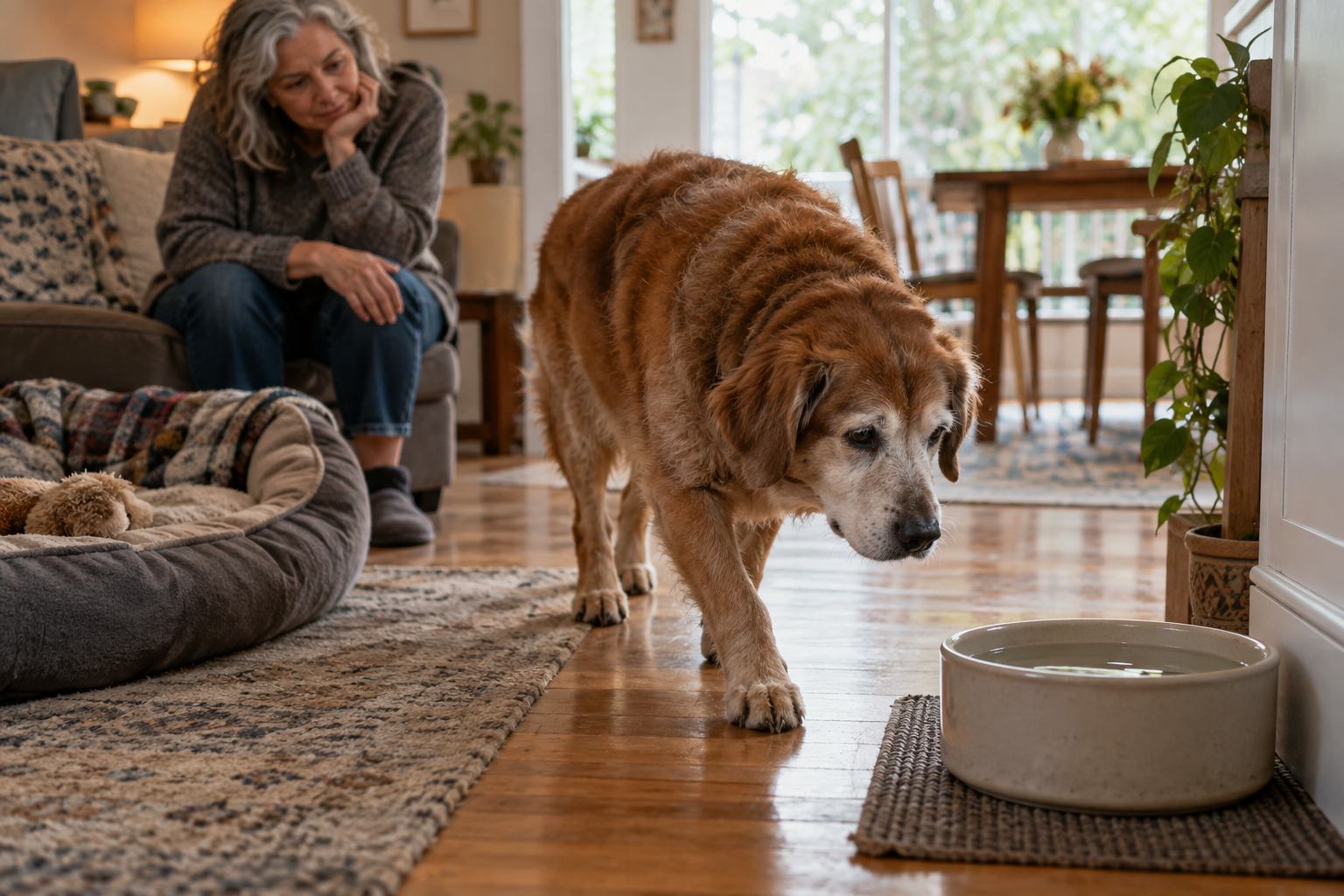
Your Veterinarian Gets a Snapshot. You See the Pattern.
A veterinary appointment gives your veterinarian valuable information about your pet at a particular point in time. At home, you see something different: the routines that repeat across days, weeks and months.
You see how your dog gets up from bed in the morning, whether your cat still jumps onto a favourite chair, how long meals take and where your pet chooses to rest. You also see how they move through familiar rooms, interact with family members and respond to routines they have known for years.
That everyday knowledge matters because aging can bring gradual changes that are easy to overlook when they happen slowly. Your role is not to decide what those changes mean medically. It is to notice what is different and describe it clearly.
That distinction is important. Good observation supports veterinary care. It does not replace it.
Look for Changes From Your Pet's Own Normal
It is easy to search online for lists of aging pet behaviour changes. Those lists can provide general context, but your pet's established routine is usually a more useful starting point.
The question is not simply, "Does my older dog sleep more?" A better observational question is, "Is my dog sleeping noticeably more than they usually do?"
The same approach can be applied to many parts of daily life. You might notice differences in appetite, water intake, mobility, sleep, interaction, toileting or willingness to participate in familiar activities.
Perhaps your cat has started choosing a different sleeping place. Maybe your dog hesitates before joining you in another room. You might notice that a familiar evening routine takes longer than it once did.
None of those observations tells you the cause. They are simply pieces of information about how your pet's normal routine may be changing.
For owners providing senior pet care at home, that individual baseline can be especially useful. You know what an ordinary day looks like for your pet because you have seen hundreds of them.
One Strange Day Is Different From a Developing Pattern
One unusual day does not necessarily create a clear picture. Pets can have changes in routine for many reasons, and a single observation may be difficult to interpret without context.
What can be more useful is noticing whether something happens again.
For example, instead of remembering that your dog seemed reluctant to climb the stairs once, you may begin to notice that the hesitation is appearing more often. Instead of thinking your cat ate less one morning, you may notice that mealtimes have gradually changed over several days.
You do not need to create numerical rules for yourself. The goal is simply to pay attention to frequency, consistency and progression.
That information can help you explain what you have actually seen rather than relying on a general feeling that your pet "just seems different."
Small Details Can Be Easy to Forget at an Appointment
When you are sitting in a veterinary appointment, small details from home can be surprisingly difficult to remember. A simple record can make those observations easier to communicate.
You might write down what changed, approximately when you first noticed it, whether it happens consistently or only sometimes, and what was happening at the time. Keep the language straightforward and descriptive.
For example, "She has stopped coming upstairs at night" provides clearer information than "She seems old lately."
Photos or short videos may sometimes help you remember or document what you have observed. They can capture movements or behaviours that are difficult to describe later.
The purpose of keeping notes is not to build a case for a diagnosis. It is to make the veterinary conversation more specific.
Why Seeing a Pet at Home Can Add Different Context
A pet's home contains the environment they navigate every day. That may include stairs, slippery flooring, favourite beds, feeding areas, doorways and the places where they usually spend time with family members.
Those surroundings can provide useful context when discussing changes in an aging pet's routine. They show the setting in which everyday movement and behaviour actually occur.
For Guelph-area families exploring a mobile vet in Guelph, mobile veterinary care in Guelph also takes place within that familiar environment. This does not mean that an in-home examination is inherently more accurate or medically superior to care in a clinic.
It simply offers a different context. For some families, mobile veterinary services in Guelph may fit naturally into conversations about an older pet's changing day-to-day routine.
Do Not Wait Until You Can Explain What Is Wrong
Pet owners sometimes feel that they need to understand a problem before calling their veterinarian. That can create unnecessary pressure to interpret a change medically.
You do not need to know the cause.
A statement such as "he has started leaving half of his breakfast" or "she no longer comes to the door when we get home" is enough to begin a conversation. Your veterinarian can decide what questions, assessment or next steps are appropriate based on your pet's individual circumstances.
This is where the owner's knowledge and the veterinarian's role work together. You provide the observations. Your veterinarian provides the medical judgment.
If something is sudden, persistent, worsening or concerning, veterinary guidance is appropriate. You do not have to wait until you feel certain about what the change means.
When the Conversation Begins to Change
For some aging or seriously ill pets, observations about comfort and daily function may eventually become part of a broader quality-of-life discussion with a veterinarian.
That is a different conversation from simply noticing that an older pet's routine has changed. The everyday observations discussed in this article should not be treated as evidence that an end-of-life decision is approaching.
However, when families do reach the stage of discussing end-of-life options, information about pet euthanasia in Guelph may become relevant as one part of that larger veterinary conversation.
The important point is that these discussions develop from an individual pet's circumstances. They should not be inferred from a checklist of ordinary aging changes.
You Know the Routine. Your Veterinarian Provides the Medical Judgment.
You know the sounds, habits and routines that make up your pet's ordinary day. You may be the first person to notice when something no longer fits that familiar pattern.
Your veterinarian brings the clinical assessment and medical judgment needed to understand those observations in context. Neither role replaces the other.
If you are noticing changes in your aging pet, speak with your veterinarian rather than waiting until you feel certain about what those changes mean.
This article provides general information and is not a substitute for veterinary advice. Changes in an aging pet can have many possible causes. If you notice something new, persistent, worsening or concerning, speak with your veterinarian about your pet's individual circumstances.
The goal is not to become your pet's veterinarian at home. It is to become a better observer of the everyday life you already know so well.