
Emergency vs Planned Euthanasia: Why Timing Changes the Experience for Your Pet
Emergency vs Planned Pet Euthanasia: What to Know
Facing end-of-life decisions for a pet is never easy. Many pet owners hope to avoid making the call too soon, but waiting can sometimes lead to situations that feel rushed and overwhelming. Understanding the difference between emergency and planned euthanasia can help you make a more controlled and compassionate choice.
For families in Guelph and surrounding areas, options like mobile pet euthanasia in Guelph provide a way to plan ahead and support your pet in a calm, familiar environment. Timing plays a critical role in shaping both your pet’s experience and your own.
Two Very Different End-of-Life Paths
There are generally two paths when it comes to euthanasia. One is planned, where the decision is made ahead of a crisis. The other is reactive, where euthanasia happens during an emergency situation.
These paths differ in environment, emotional impact, and the level of comfort your pet experiences. A planned approach focuses on control and preparation, while an emergency approach is often driven by urgency and limited options.
What Emergency Euthanasia Often Looks Like
Emergency euthanasia usually happens when a pet’s condition suddenly worsens or when decline has progressed beyond what can be managed at home. This often involves urgent transport to a clinic, sometimes during off-hours or in distressing conditions.
Pets may already be in pain, struggling to breathe, or unable to move comfortably. The unfamiliar setting, combined with physical discomfort, can increase stress. Decisions must be made quickly, often without time to process or prepare.
In many cases, these situations develop after a period of uncertainty. Pet owners may not realize how quickly decline can accelerate. This is explained in how long a pet can live with a terminal diagnosis, which highlights how unpredictable timelines can be.
What Planned Euthanasia Looks Like at Home
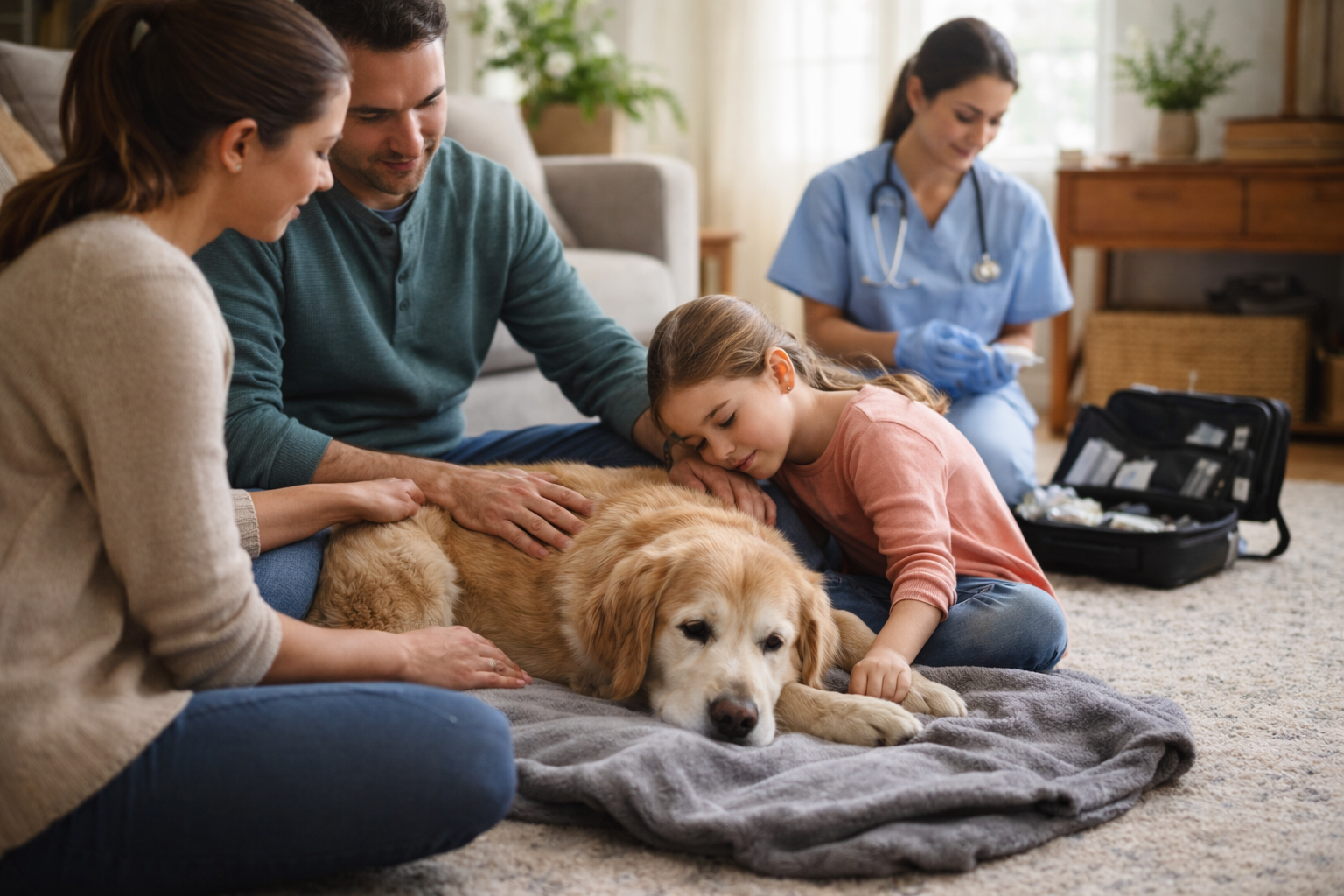
Planned euthanasia offers a different experience. It allows you to choose a time when your pet is still relatively stable and your family can be present and prepared.
In-home euthanasia creates a calm and familiar setting. Your pet can rest in their usual space, surrounded by people they trust. There is no need for stressful transport or exposure to unfamiliar environments.
Knowing what to expect can also reduce anxiety. A clear explanation such as what a peaceful passing looks like helps families feel more prepared and supported.
How Timing Changes Your Pet’s Experience
Timing has a direct effect on your pet’s comfort. When euthanasia is planned, it can happen before severe symptoms develop. This helps avoid episodes of panic, uncontrolled pain, or breathing distress.
Pets are more likely to remain calm in a familiar environment. They are not exposed to the noise, smells, and urgency of a clinical setting. This reduces both physical and emotional stress.
Supportive care strategies, like those in tips for managing a senior pet’s comfort, can help maintain comfort temporarily. However, these measures cannot prevent the progression of serious illness.
How Timing Changes the Family Experience
Planned euthanasia allows families to approach the moment with intention. You have time to gather loved ones, create a quiet setting, and say goodbye in a meaningful way.
This preparation can help reduce anxiety and regret. Families often feel more at peace knowing they made a thoughtful and compassionate decision.
In contrast, emergency situations can feel overwhelming. Decisions are made quickly, often during moments of fear or distress. This can make the experience harder to process emotionally.
Planning also allows families to involve children in a thoughtful way. Guidance such as should children be present for end-of-life appointments supports making these decisions with care.
Preparing children ahead of time, as outlined in explaining pet loss to young children, can help them understand and cope with the experience.
Why Emergencies Happen
Emergency euthanasia is not always avoidable, but it often occurs when decline progresses further than expected. Many pets experience cycles of good and bad days, which can make it difficult to judge the right time.
Emotional hesitation is another factor. Pet owners may delay because they hope for improvement or fear making the decision too early. This is a common and understandable response, explored in understanding anticipatory grief.
Recognizing that decline is often gradual, then sudden, can help you avoid reaching a crisis point.
Signs You Can Still Plan Ahead
There are usually early indicators that allow for a planned approach. These include reduced appetite, decreased mobility, and changes in behavior or engagement.
You may also notice your pet having more difficult days than good ones. Tracking these patterns can help you decide before an emergency occurs.
A more detailed guide like how to know when it is time can help you identify these signs clearly.
Planning ahead means you can act with intention, rather than reacting under pressure.
How to Shift from Reactive to Planned Care
Shifting to a planned approach begins with early conversations. Speaking with a veterinary professional helps you understand your pet’s condition and expected progression.
Working with an experienced team provides reassurance and clarity. Learning more aboutthe team and approach can help build confidence in your decision.
Planning also allows you to focus on your pet’s final days. Resources likepreparing for the end highlight how meaningful this time can be.
It also gives you time to plan aftercare decisions. Reviewing choosing the right aftercare option and aftercare options in Guelph helps reduce stress later.
Planning ahead can also ease the transition for other pets in your home. Guidance like supporting other pets through loss can help you prepare.
Taking the Next Step
If your pet is aging or facing a serious illness, considering your options early can make a meaningful difference. Planning ahead allows you to focus on comfort, dignity, and a peaceful experience.
You can explore more guidance through the Lakeside Vets blog to better understand your options.
Request an in-home euthanasia consultation to discuss your pet’s condition and create a plan that supports both your pet and your family. If you have questions or need support, you can also reach out directly.
